

Raw Footage Is Not Content — Here's What Professional Editing Actually Does for Your Business
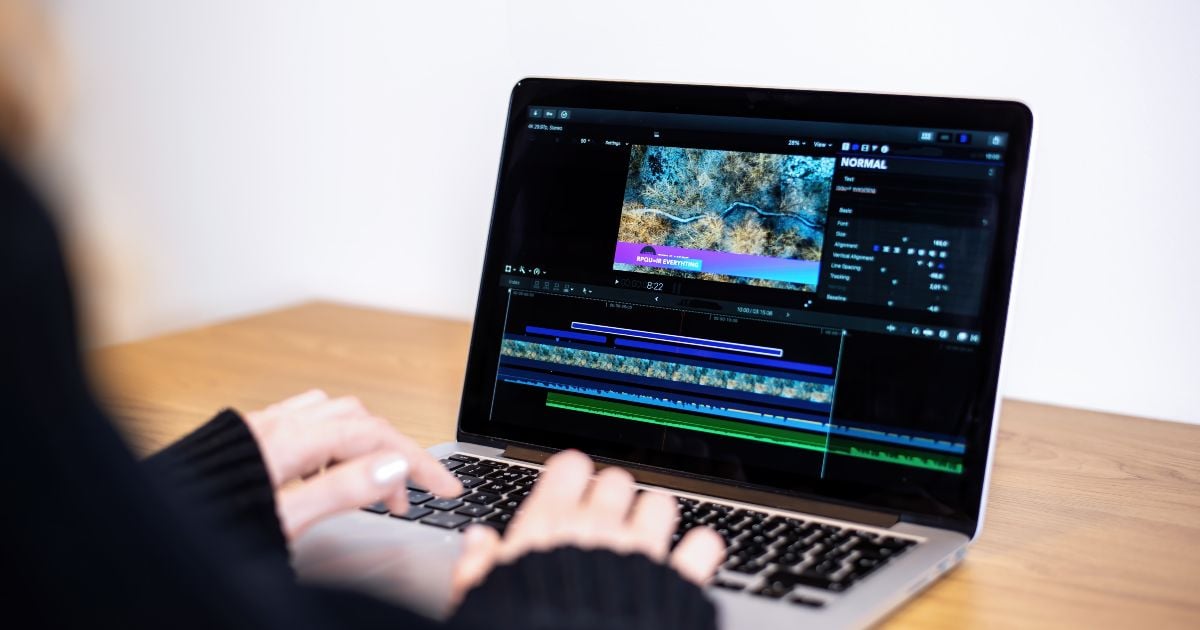
Most service-based business owners who invest in creating video content think the hard part is showing up on camera. The scripting, the filming, the vulnerability of putting yourself out there — that's where the energy goes.
But there's a phase that happens after all of that which determines whether any of it actually works. It's the phase where raw footage — unpolished, unstructured, full of pauses and tangents and imperfect moments — becomes the kind of content that stops someone mid-scroll, keeps them watching, and moves them toward reaching out.
That phase is content editing. And for most service-based businesses, it's the most underestimated step in the entire content creation process.
Content editing for service-based businesses isn't just cutting out the mistakes and adding a few transitions. Done well, it's a strategic process that shapes the story, controls the pacing, reinforces the brand, and makes every piece of content as compelling and conversion-focused as possible. Done poorly — or skipped entirely — it leaves the most valuable work unfinished.
WHY RAW FOOTAGE ALONE NEVER BECOMES GREAT CONTENT
There's a reason professional media — even content that's designed to look casual and authentic — goes through an editing process before it reaches an audience. Raw footage captures what happened. Editing shapes what the viewer experiences.
Without editing, a few things consistently go wrong for service-based business owners:
The pacing drags. Real conversation has natural pauses, filler words, moments of reorganization, and tangents that make perfect sense in real time but lose an online audience within seconds. Content editing for service-based businesses tightens pacing dramatically — removing everything that doesn't serve the message and keeping the content moving at a rate that holds attention from start to finish.
The hook doesn't land. The most important moment in any piece of video content is the first three seconds. In raw footage, those three seconds are often a greeting, an introduction, or a setup — the least compelling part of what was said. Editing restructures content so the most attention-grabbing moment comes first, before the viewer has a reason to scroll away.
The message gets lost. Even well-scripted content can lose its clarity in execution. A rambling explanation here, a repeated point there, a tangent that seemed relevant in the moment — these are natural parts of speaking on camera. Editing strips them out and preserves the clean, direct version of the message that the script intended.
The brand feels inconsistent. When every video looks and sounds slightly different — different color grading, different caption styles, different music, different pacing — it creates a subconscious impression of inconsistency. Content editing for service-based businesses establishes and maintains a consistent visual and auditory identity across every piece of content, so your brand feels recognizable and professional whether someone is watching their fifth video of yours or their first.
WHAT PROFESSIONAL CONTENT EDITING ACTUALLY INVOLVES
Content editing for service-based businesses is a multi-layered process that goes well beyond basic trimming. Here's what it actually encompasses:
Structural editing is the first and most foundational layer. Before any technical work happens, the editor reviews the raw footage and determines the best possible structure for the final piece — what to keep, what to cut, what order things should go in, and where the content needs to be tightened or restructured to serve the message most effectively. This is where the story gets shaped.
Visual editing covers everything the viewer sees — color grading that creates a consistent look and feel, text overlays and captions that reinforce key points and keep viewers engaged even when watching without sound, B-roll footage that adds visual variety and illustrates what's being said, and graphics or animations that support the brand identity. Content editing for service-based businesses at a professional level treats every visual element as a deliberate choice, not a default.
Audio editing addresses everything the viewer hears — cleaning up background noise, balancing audio levels, adding music that sets the right tone without overwhelming the voice, and ensuring the overall sound quality reflects the professionalism of the brand. Poor audio quality is one of the fastest ways to lose viewer trust, and it's one of the most fixable problems in the editing process.
Platform optimization means adapting the edited content for the specific requirements and behaviors of each platform it will be published on. A piece of content edited for Instagram Reels has different dimensions, different caption placement, different pacing expectations, and different optimal length than the same content adapted for LinkedIn or YouTube. Content editing for service-based businesses accounts for these differences rather than applying a one-size-fits-all approach.
Caption and subtitle integration ensures your content is accessible and effective for viewers watching without sound — which, on most social platforms, is the majority. Captions that are accurate, well-timed, and visually consistent with the brand make content significantly more watchable and dramatically increase retention rates.
THE DIFFERENCE PROFESSIONAL EDITING MAKES IN REAL RESULTS
The impact of professional content editing for service-based businesses isn't just aesthetic. It's measurable in the metrics that matter most.
Video retention rates increase when pacing is tight and the hook is strong — more viewers watch more of the content, which means more people receive the full message and call to action. Engagement rates improve when captions are clear, visuals are compelling, and the content feels polished enough to share. And conversion rates go up when the editing reinforces the script's conversion structure — making sure the call to action lands with the same clarity and confidence that the script intended.
The cumulative effect of consistently well-edited content is a brand that looks, sounds, and feels like a category leader in your market — regardless of how large or small your business actually is. Professional editing levels the playing field between a solo service business owner and a much larger competitor, because what the viewer experiences is the edited output, not the resources behind it.
HOW CONTENT EDITING FITS INTO THE FULL SYSTEM
Content editing for service-based businesses is the phase that transforms production into distribution-ready assets. It sits between the shoot and the posting calendar — taking what was captured and turning it into what gets published.
Like every other phase of a complete content system, editing performs best when it's connected to the phases before and after it. Scripts that were built with a clear conversion structure give editors a roadmap for what the final piece needs to accomplish. Shot lists that were designed with editing in mind produce footage that's easier and faster to work with. And analysis data from previous content informs editing decisions — doubling down on the styles, formats, and structures that have already proven to convert.
Content editing for service-based businesses in isolation can improve individual pieces. Content editing as part of a complete system improves the entire pipeline.

If you've been filming content that never quite looks or performs the way you imagined it could, a 15-minute Content Pipeline Audit is the fastest way to find out where the gap is — and what a professional editing process would look like for your business.
Book Your Free 15-Min Content Pipeline Audit: https://www.seeallaspects.com/contact
See All Aspects is a full-service content agency in Orlando, FL, helping service-based business owners turn raw footage into polished, on-brand content that builds their audience and fills their pipeline.

Your full-service content partner — from research and scripting to production and strategy.

